
Most of what a print shop retypes isn’t design. It’s an office address someone spelled three ways, a barcode number with two digits swapped, a best-before date worked out by hand, a warning that applies to one product and not the next. Each one means another template, or another proof.
The new editor now does that work itself. A design can read a short form, look the rest up in your spreadsheets, work out dates and sums, and show only the lines that apply. The customer answers questions instead of rearranging your artwork, and the print file arrives right. Watch it in two minutes, then try the demos yourself:
A field is a named value, such as Office or Best before. Type its name
in curly brackets inside any text, Tel. {Office phone}, and the text shows
its value. Each field gets its value from one of four places:
date_add([Packed on], 18, "months").Upload a CSV under Designs → More actions → Data Sources: a list of offices, products, ingredients or prices, up to 5,000 rows. Designs read it by its file name. When the list changes, upload the file again with the same name and every design that reads it follows. Nothing in the designs changes.
Formulas join text, do sums, compare values and choose between them, add days, months or years to a date and write it out, and format money, phone numbers and percentages. There are more than 50 functions. Under the formula, the panel shows the result for sample values, or what is wrong with it.
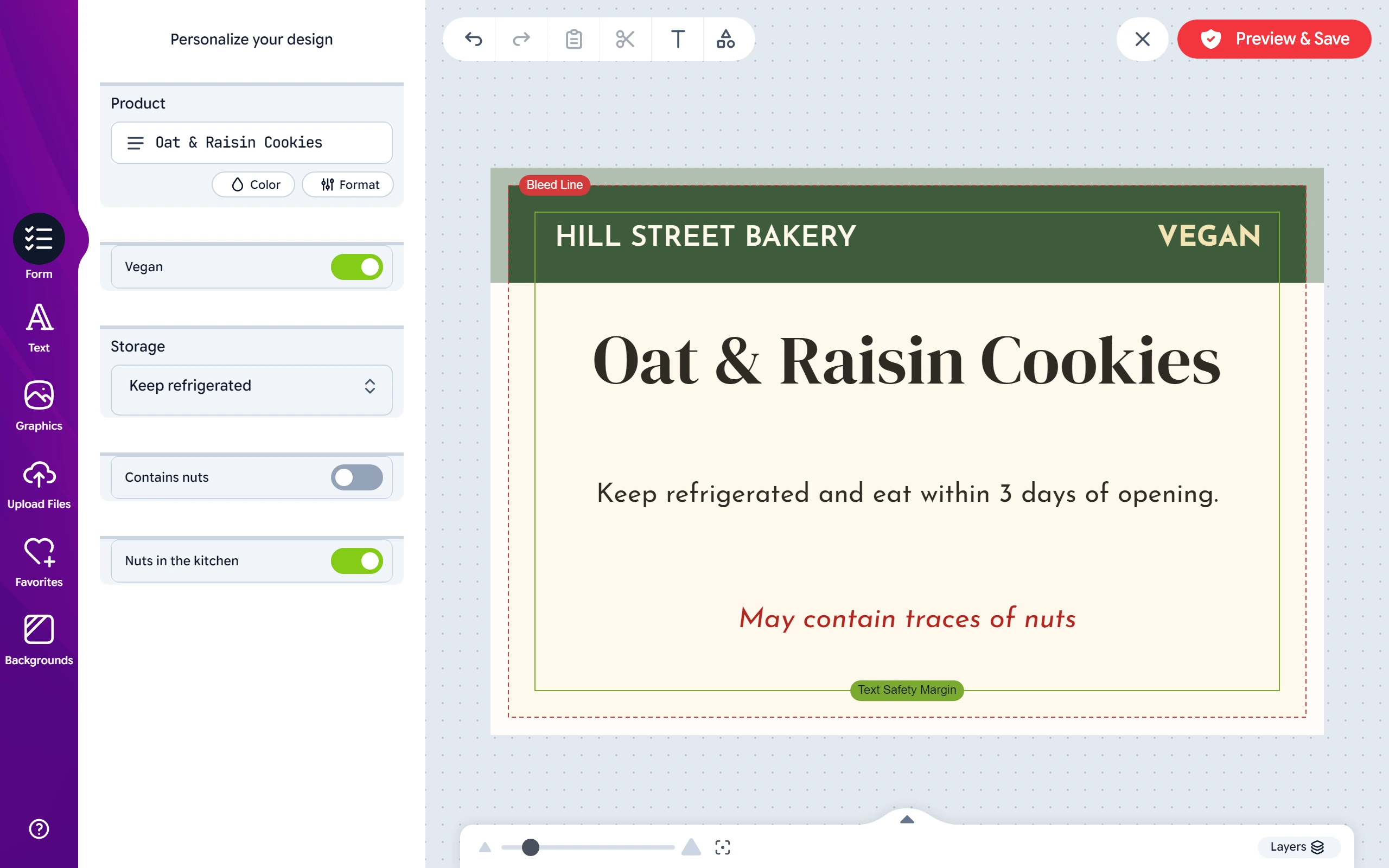
Any text, picture or shape can show only when a field is, isn’t, is empty or is ticked. One bakery label serves every product: a Vegan badge when it is ticked, one of three storage lines, and a nut warning that depends on two answers. A hidden item is left out of the preview and the print file.
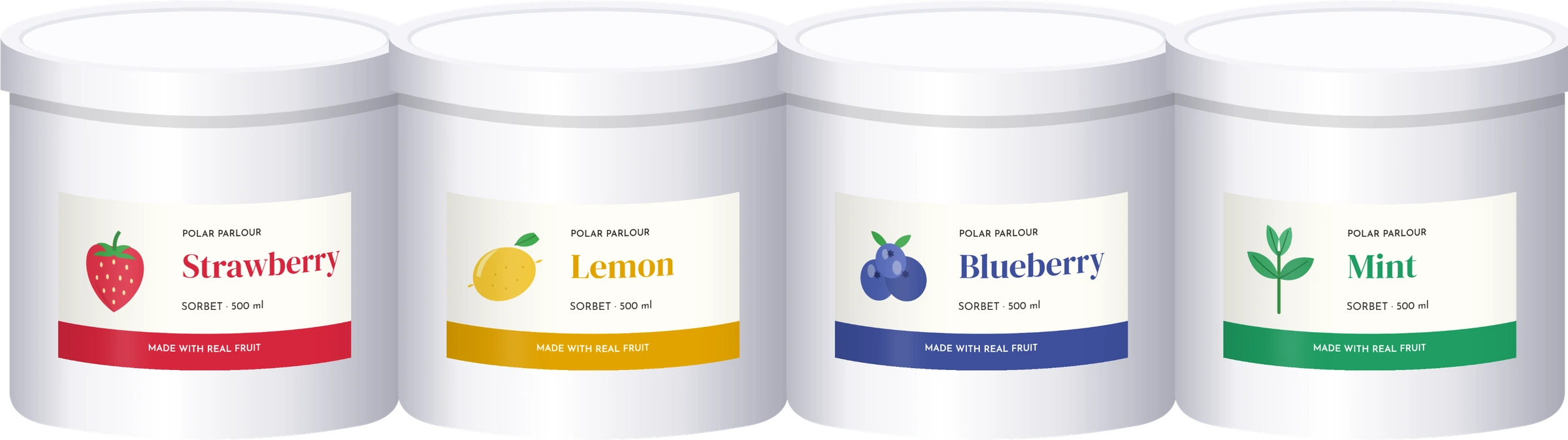
A picture frame can show the picture named like a field’s value, so
Blueberry picks blueberry.png. Any item can take its color from a color
field, chosen from the colors you list, and named colors from your
palettes print in the CMYK values you set. One sorbet label now covers the
whole range: a new flavor is a picture and a named color, not a new
template.
Long values fit too. Turn on Shrink to Fit and a long name or address shrinks until it fits the space you left, and the panel tells you when even the smallest size is too big.
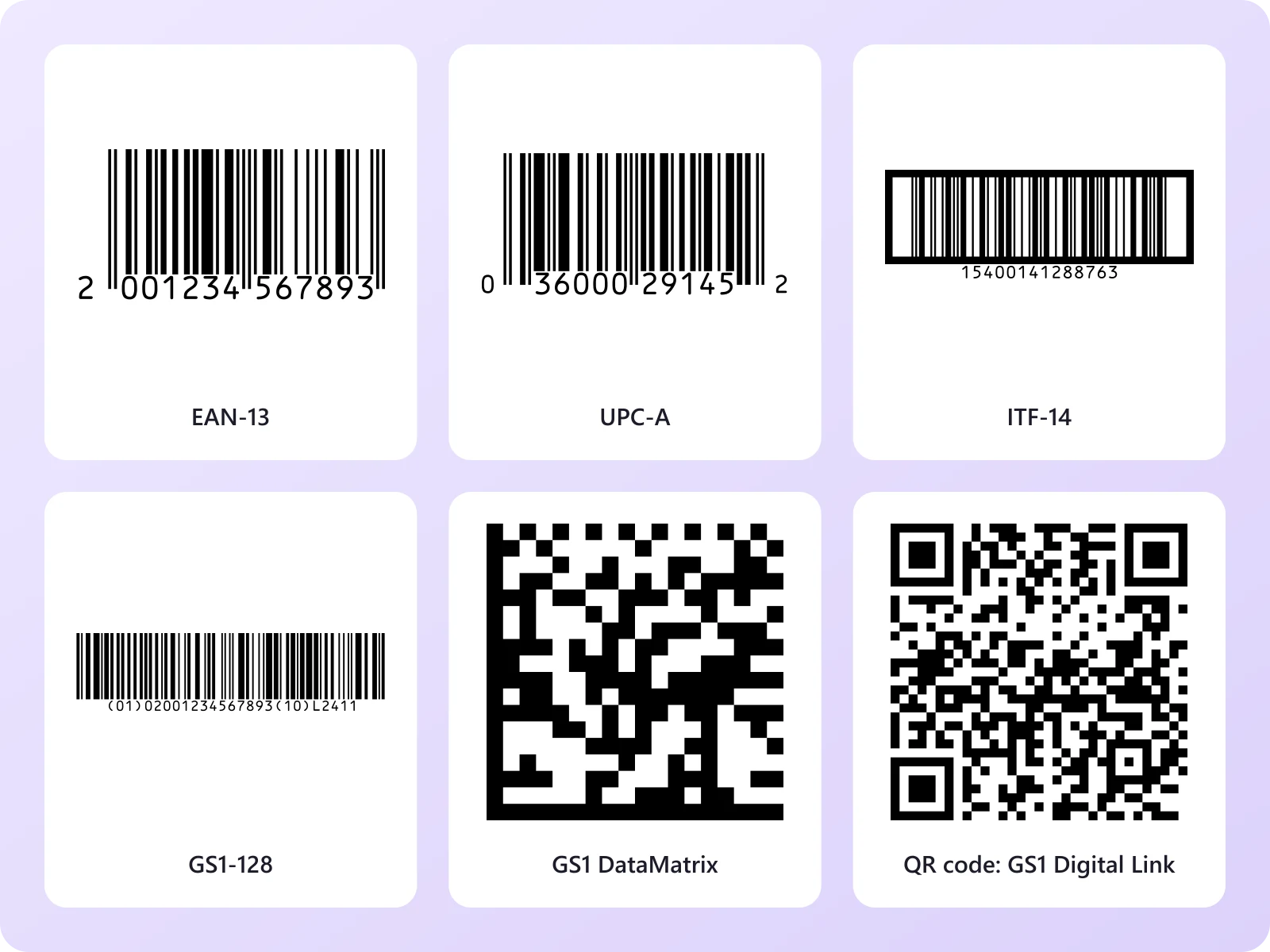
Add a barcode with the code button in the editor’s top bar, next to QR code, and pick its type: EAN-13, EAN-8, UPC-A, UPC-E, ITF-14, GS1-128, Code 128, Code 39, DataMatrix, GS1 DataMatrix, PDF417 or USPS Intelligent Mail. The bars and the digits under them are vector shapes in the print PDF.
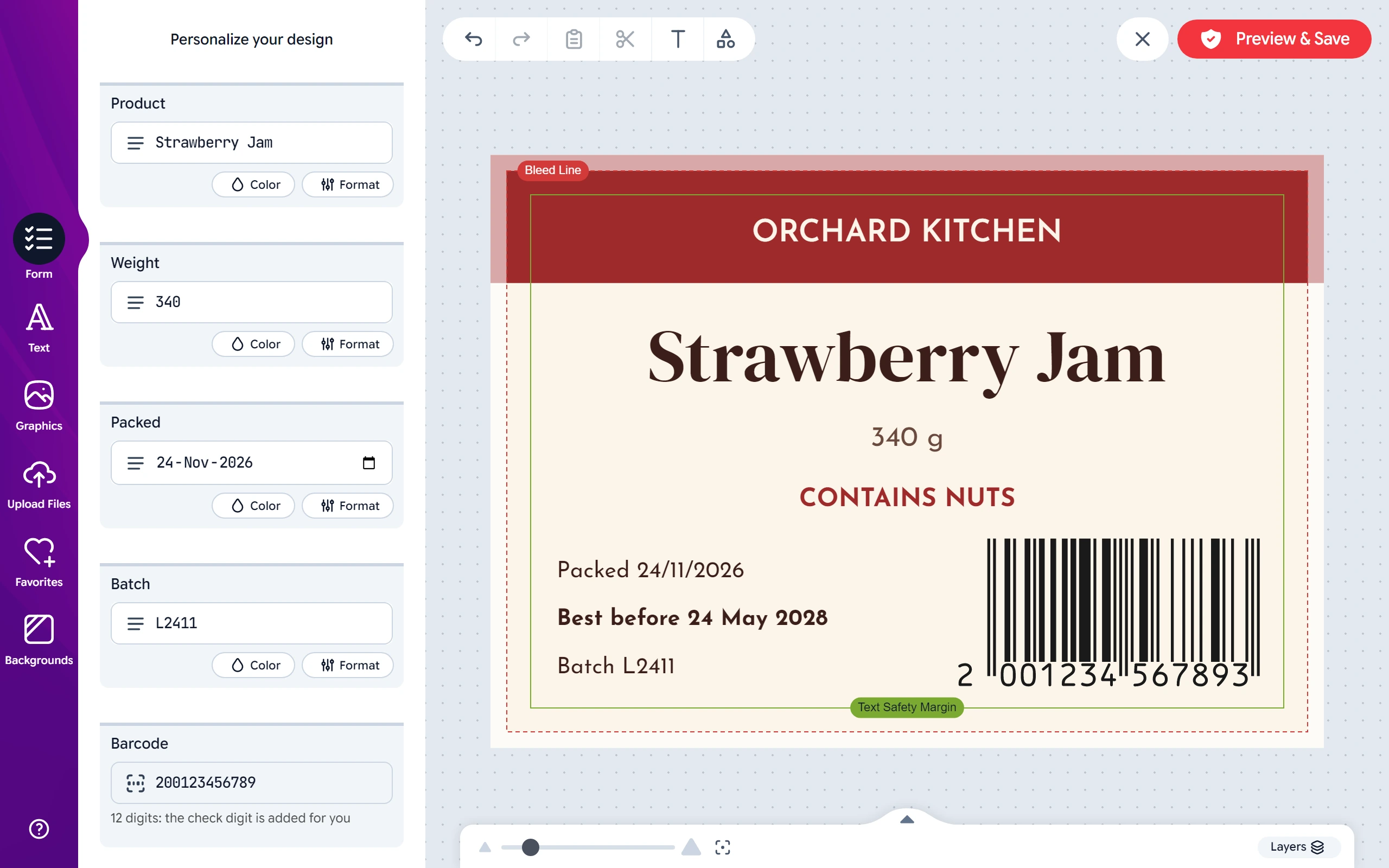
The number is checked as the customer types it. For EAN, UPC and ITF-14, a number one digit short gets its check digit worked out, and a wrong one is refused, with the reason, in the form. A wrong number is never drawn as bars, so it can’t reach your press. A barcode can also read a field: the number the customer types, one looked up from the product they pick, or one worked out with a formula.
A QR code can hold a formula instead of a fixed link. mecard([Name], [Phone], [Email]) makes a contact the phone offers to save,
wifi([Network], [Password]) joins a Wi-Fi network, gs1_link() makes a
GS1 Digital Link from a product’s number, batch and date, and
url_with_utm() tags a link so your analytics show which print job sent
the visit.
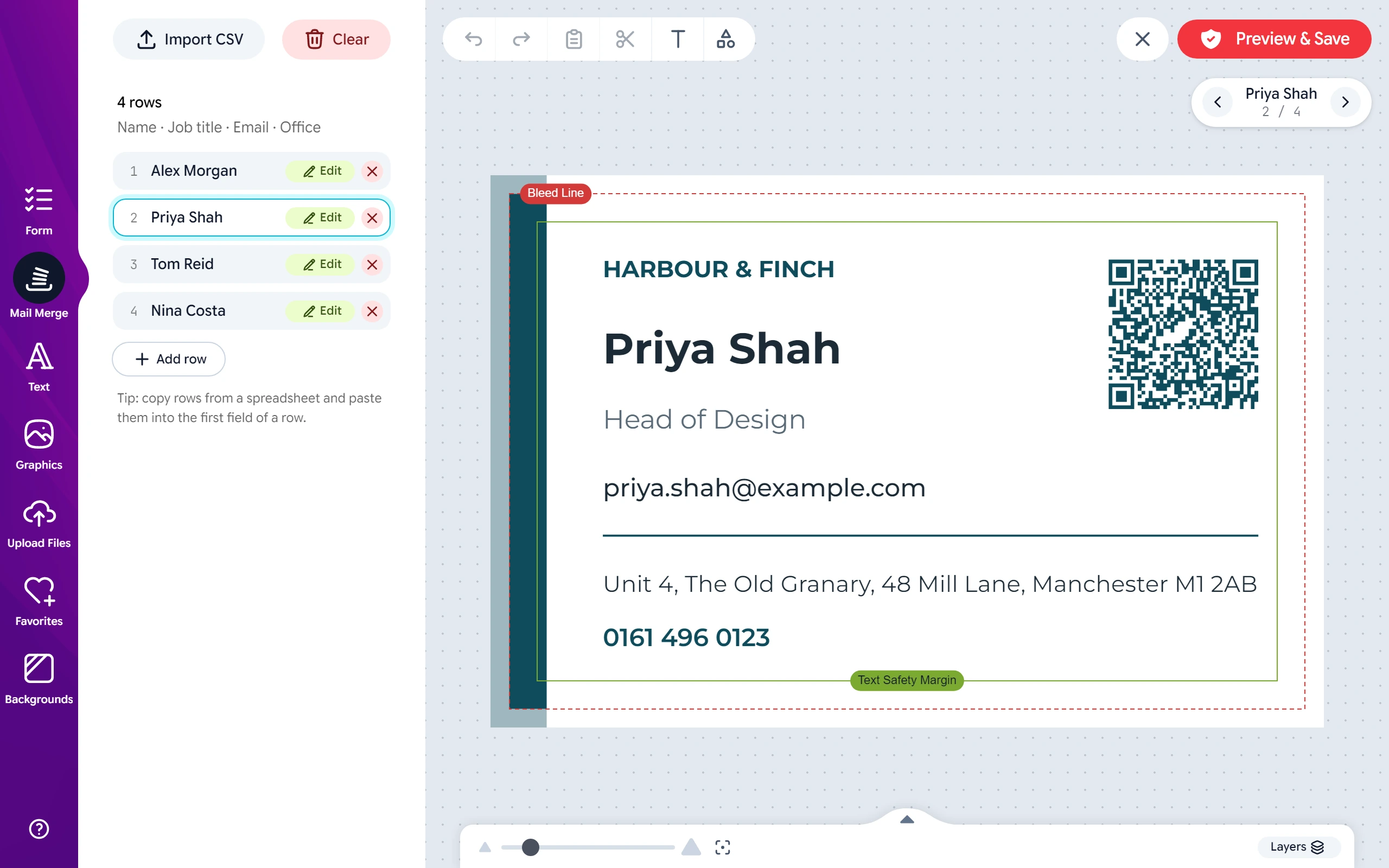
Turn on Mail Merge for a design and the form becomes a list. The customer types a row per person, pastes rows from Excel or Google Sheets, or imports a CSV file, up to 250 in one order. Every row runs the same lookups, formulas and rules, and gets its own QR code. The order is one print file, with every card in the order of the list.
The Steps layout knows about fields too: it asks for dropdowns, tick boxes and colors one step at a time, and leaves out anything looked up or worked out.
Each of these runs as a live editor on the new pages. Nothing to install, and nothing is saved:
Then follow a tutorial. Each takes 10 to 15 minutes and has a screenshot for every step: the food label, the bakery label, the flavor range, the party invitation and the office picker. The Data Sources guide covers every field type, formula and rule.
Everyone on the new editor, at no extra cost: a print file is still $0.10, after 100 free each month, and a Mail Merge order is one print file. Stores created since August 25, 2026 start on the new editor. Older stores turn it on in the dashboard under Settings → Designer → Switch to new Editor.


